

New Zealand sea lions and fur seals on the Otago Peninsula

The Otago Peninsula is one of the best places in New Zealand to see both New Zealand sea lions and New Zealand fur seals in the wild.
These remarkable marine mammals have become an important part of the peninsula’s wildlife story, drawing visitors from around the world who hope to observe them in their natural coastal habitat.
With Clearwater Wildlife Tours, guests enjoy exceptional opportunities to encounter sea lions and fur seals while exploring private family farmland and conservation areas on the wild side of the Otago Peninsula. Watching these animals resting, interacting and behaving naturally is often one of the highlights of the tour.
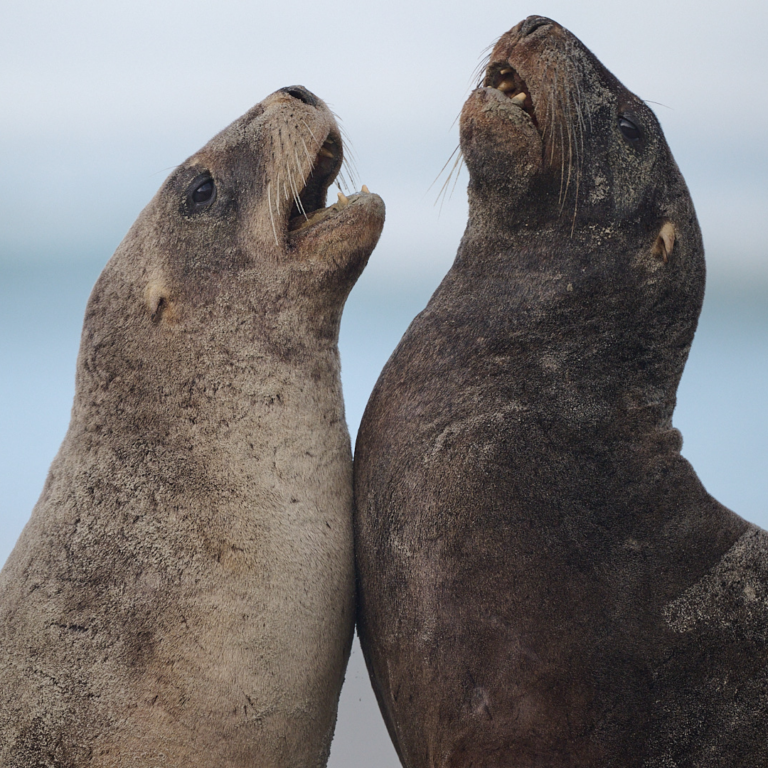
Meet the New Zealand sea lion
The New Zealand sea lion (whakahao/pakake) is one of the rarest sea lion species in the world and is found only in New Zealand. Once heavily reduced by hunting, the population remains vulnerable, making conservation efforts more important than ever.
Unlike many marine mammals, sea lions often haul themselves well above the high tide line and can sometimes be found resting on beaches, dunes, grassy areas and coastal farmland. Their size, confidence and curiosity make them one of the most memorable wildlife encounters on the Otago Peninsula.
Quick Facts
- Found only in New Zealand
- One of the world’s rarest sea lion species
- Adult males can weigh over 300kg
- Often rest far from the water
- Protected by New Zealand law
Meet the New Zealand fur seal
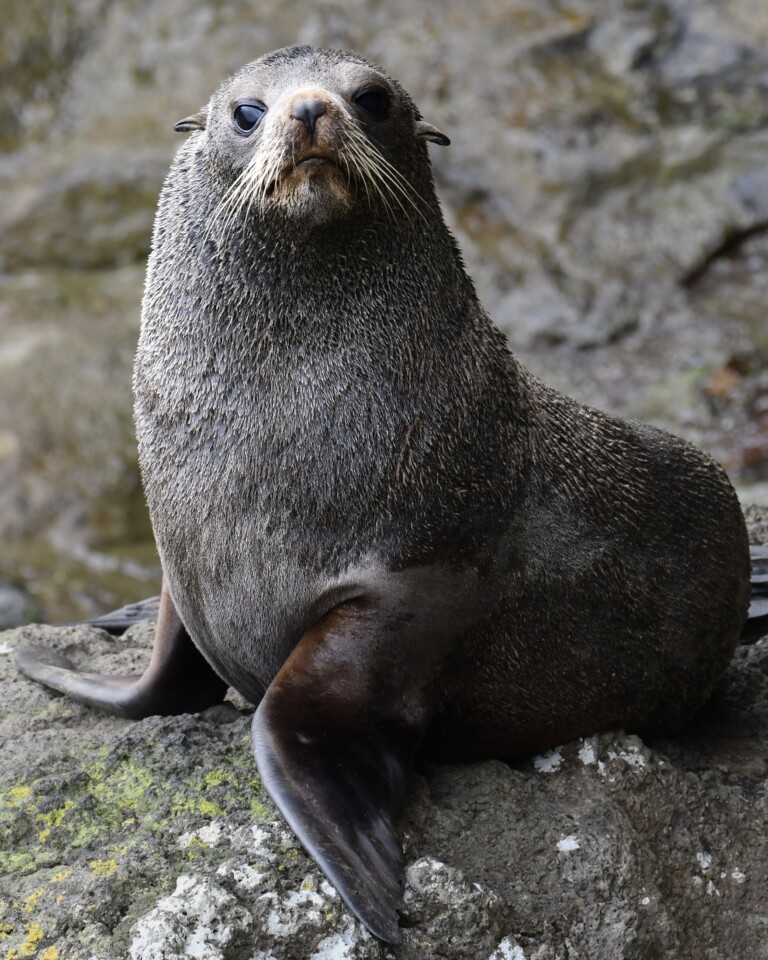
New Zealand fur seals (kekeno) are a conservation success story. Once hunted extensively, populations have recovered significantly and are now commonly seen along rocky coastlines throughout the South Island.
Fur seals are smaller, more agile and generally more comfortable on steep rocky shorelines than sea lions. They are excellent swimmers and can spend long periods at sea before returning to shore to rest.
Visitors are often surprised by how playful and athletic fur seals can be, particularly young animals interacting around breeding colonies.
Quick Facts
- Native to New Zealand
- Strong population recovery over recent decades
- Often found on rocky headlands and reefs
- Excellent climbers and swimmers
- Protected marine mammals
NZ sea lion vs NZ fur seal
New Zealand Sea Lion | New Zealand Fur Seal |
|---|---|
| Much larger body | Smaller, slimmer body |
| Broad, blunt snout | Pointed nose |
| Often rests on sandy beaches | Usually found on rocks and reefs |
| Can move surprisingly quickly on land | More agile climbers |
| Frequently seen well inland from the shore | Usually remains closer to rocky coastline |
Once you’ve seen both species together, the differences become much easier to recognise.
Staying safe around New Zealand sea lions
New Zealand sea lions are protected wild animals and should always be treated with respect.
On Clearwater Wildlife Tours, we follow Department of Conservation guidelines and maintain a minimum distance of 20 metres wherever possible to ensure the animals remain relaxed and undisturbed.
If you encounter a sea lion anywhere in New Zealand, you should:
- Give it plenty of space
- Stay calm and move slowly
- Allow it a clear path to the sea
- Keep dogs and children away
- Use a zoom lens rather than approaching
Never:
- Touch or feed a sea lion
- Attempt to take a selfie with one
- Walk between the animal and the ocean
- Surround or corner the animal
- Allow children or dogs to approach
Where can you see sea lions near Dunedin?
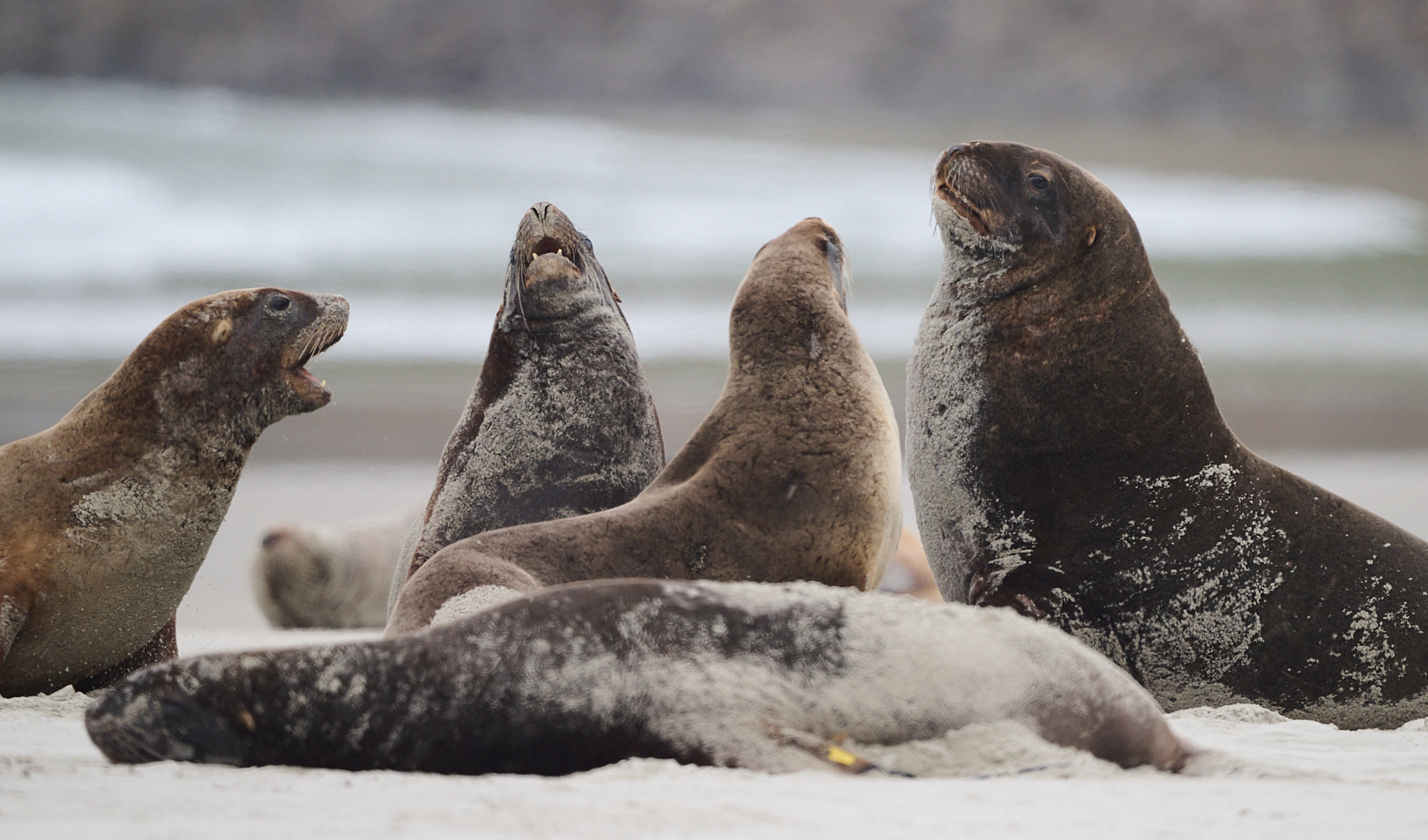
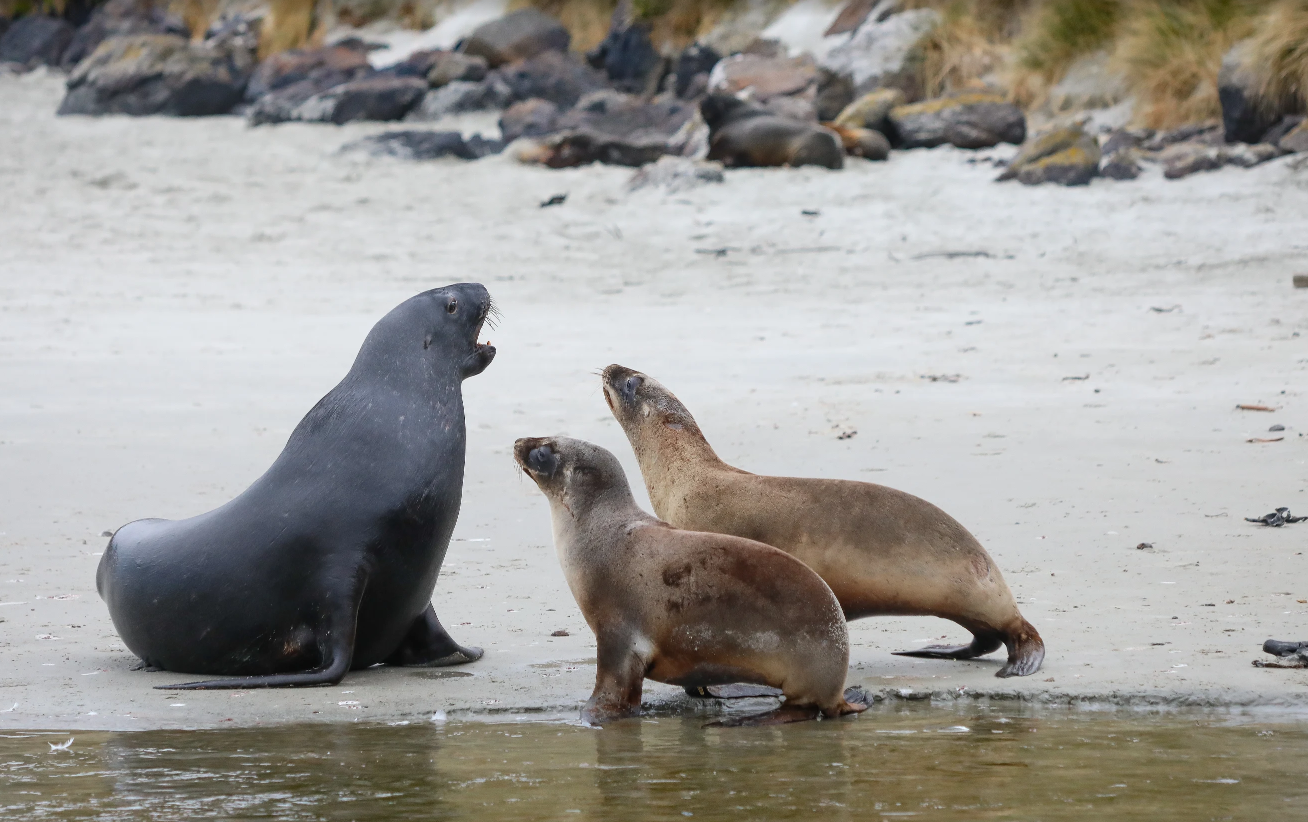
The Otago Peninsula is one of the best places in mainland New Zealand to encounter wild New Zealand sea lions. They regularly use the peninsula’s beaches and coastal habitats for resting and breeding.
With Clearwater Wildlife Tours, guests visit secluded coastal areas where sea lions are regularly observed at a respectful distance. Because access to these locations is not open to the public, viewing opportunities are quieter, more relaxed and less crowded than at public wildlife sites.
Watching a sea lion relaxing or playing on a remote beach is a special reminder that these animals are genuinely wild and free-ranging.
Where can you see fur seals near Dunedin?
New Zealand fur seals can be found throughout the Otago coastline, particularly around rocky shoreline habitats and breeding areas.
Our tour includes opportunities to observe fur seals and their playful pups from carefully managed viewing locations within private conservation areas. Watching seals interact within a breeding colony provides fascinating insights into their social behaviour and daily life.
Alongside sea lions, hoiho and albatross, fur seals contribute to the incredible diversity of wildlife found on the Otago Peninsula.
What should you do if a sea lion is on the beach?
If a New Zealand sea lion is resting on a beach, the best thing to do is simply leave it alone.
Sea lions spend much of their time resting between feeding trips. Although they can appear sleepy, they can move surprisingly quickly when disturbed.
If a sea lion is on your path:
Stop and assess the situation.
Move away slowly.
Give the animal plenty of room.
Allow it complete freedom to move.
Wait or choose an alternative route if necessary.
Respectful behaviour protects both people and wildlife.
Why responsible wildlife viewing matters
Both New Zealand sea lions and fur seals face challenges in a changing world. Habitat protection, public education and responsible tourism all play important roles in ensuring future generations can continue to experience these remarkable animals.
Our tours are designed around low-impact wildlife viewing principles. We prioritise animal welfare, maintain appropriate distances and help visitors understand the importance of conservation throughout the Otago Peninsula.
When wildlife is observed responsibly, natural behaviours continue undisturbed and the experience becomes more authentic for everyone involved.
See sea lions and fur seals with Clearwater Wildlife Tours
Few wildlife experiences compare to watching a New Zealand sea lion resting on a remote beach or observing a fur seal colony along a rugged stretch of coastline.
Our award-winning small-group tours provide access to private conservation areas on the wild side of the Otago Peninsula, offering exceptional opportunities to encounter these iconic marine mammals alongside yellow-eyed penguins, royal albatross and a wealth of native birdlife.
With a maximum of just 10 guests, expert guiding and a strong conservation focus, Clearwater Wildlife Tours offers an authentic and unforgettable way to experience some of New Zealand’s most remarkable wildlife.
Frequently Asked Questions
How close can you safely get to a New Zealand sea lion?
You should stay at least 10 metres away from a New Zealand sea lion, and further if it is moving or resting, as advised by the Department of Conservation. On our tours we keep guests at least 20 metres back so the animals stay relaxed and undisturbed.
What should you do if a sea lion is on the beach in front of you?
If a New Zealand sea lion is on the beach in front of you, back away slowly, give it plenty of space, and avoid direct eye contact. Never walk between a sea lion and the sea, especially if it is heading for the water, and keep any dogs well away. This is New Zealand specific advice for our native sea lions.
How do you tell a New Zealand sea lion from a fur seal?
New Zealand sea lions are much larger and bulkier than fur seals, with a broad, blunt snout, and they often rest well up the beach. New Zealand fur seals are smaller, have a more pointed nose and long pale whiskers, and tend to haul out on rocky shorelines.
Where can you see fur seals near Dunedin?
New Zealand fur seals can be seen along the rocky coast of the Otago Peninsula near Dunedin. Our tours visit a secluded fur seal breeding colony on private land, where you watch them from a respectful distance alongside sea lions and penguins.
Where can you see New Zealand sea lions near Dunedin?
New Zealand sea lions can be seen along the beaches and coastline of the Otago Peninsula near Dunedin. On our tours you watch them on a private coastal farm, where they haul out to rest, viewed from a safe distance alongside penguins and fur seals.